
S1 Own workforce
Introduction
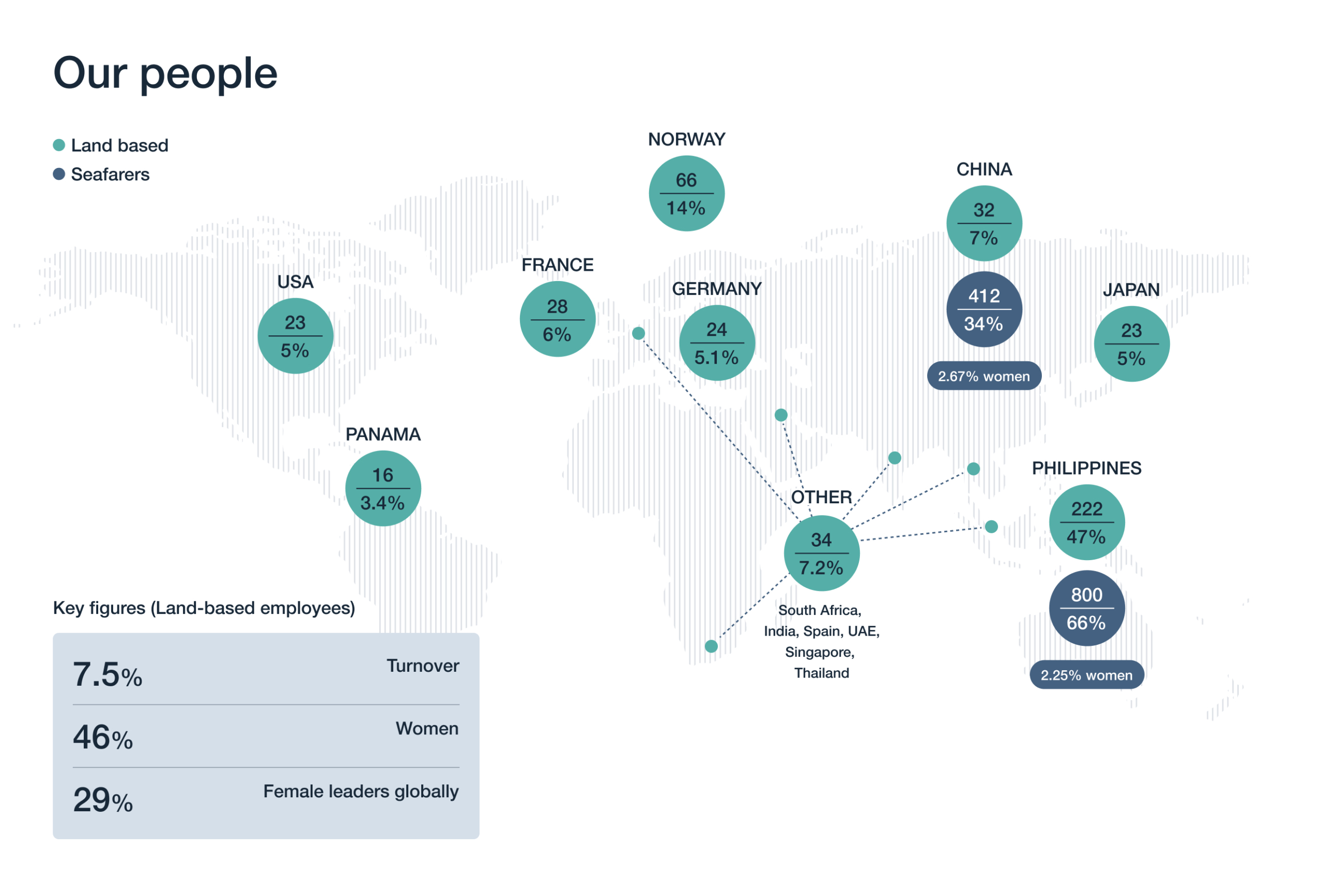
We employ 1,681 dedicated professionals across our global operations, including 469 land-based employees in 16 office locations and 1,212 seafarers from China and the Philippines. We also work closely with a large network of agents and suppliers who support our operations. The organisational model of having an efficient, lean, and focused organisation including our in-house technical, crewing and customer services teams is considered a strength in maintaining high standards and delivering exceptional service to our customers.
Our business model involves complex operations carried out by a diverse workforce, which brings about various people-related impacts, risks and opportunities. The diversity of local labour regulations and practices across our global footprint adds to this complexity. Regardless of their role or employment status, we are committed to ensuring fair and safe working conditions for all our workers. This commitment is essential for attracting and retaining talent.
Given the nature of the shipping industry, our employees face potential negative health and safety impact, including work-related injuries and life-threatening incidents. Additionally, our global presence exposes our assets and personnel to security risks, especially in regions with geopolitical instability. Managing these risks is crucial for maintaining efficiency and safety of our operations. Our workforce may also encounter harassment, discrimination, or violence, which can create unsafe working environments, particularly for vulnerable or underrepresented groups.
Our people are key to our success and ESG goals. We prioritise safety, inclusivity, and professional growth through human capital management, diversity, equity and inclusion (DE&I), safety and security, and labour rights, underpinned by a strong commitment to human rights.

Höegh Autoliners’ People Strategy
Our People strategy outlines the principles guiding our practices and policies. It encompasses employee attraction, development, and engagement activities to ensure workforce continuity and stability and commitment to executing our strategy.
Our long-term people goals are:
- Cultivate and invest in diverse agile teams who learn together, collaborate globally and drive bold transformation for our business, partners and customers
- Promote the wellbeing of our people and local communities through relevant programmes and offers
- Adopt digital tools to continually develop our shipping heritage and support efficient and safe operations
Every year, the people priorities, with specific focus areas, are set and agreed upon by the Board. We carefully monitor and analyse the impact of our people strategy through annual employee engagement surveys, formal and informal feedback channels and various other methods which help us shape our programs and targets.
Höegh Autoliners’ Approach to Human Rights
We recognize the impact of our business on human rights in various ways and integrate this into our strategy and work, both for our own workforce and workers in the value chain. We monitor our compliance with the UN Guiding Principles, the ILO Declaration, and OECD Guidelines through the following processes:
Our human rights commitments are embedded in key policy documents. These policies address topics such as forced labour, child labour, or any practice that constitutes trafficking in person or slavery and are upheld through regular reviews.
We have conducted a human rights assessment to identify key human rights issues within our operations and across our value chain.
We include comprehensive human rights training to equip our people with the necessary knowledge and tools.
In addition to CSRD reporting, we publish a Norwegian Transparency Act Statement on our website detailing our human rights due diligence, commitments, actions taken, and future plans which is approved by the Board of Directors.
We have established structured workplace incident management and grievance procedures to address any human and labour rights violations or safety concerns. This includes confidential reporting mechanisms, investigations, corrective actions, and tracking of incidents to prevent recurrence.
We monitor adherence to human and labour rights by tracking cases raised through internal grievance mechanisms and conducting audits of suppliers.
We regularly engage with key stakeholders who could be impacted by our operations to ensure their concerns are addressed.
The Chief HR and Communications Officer in collaboration with the Chief Legal Officer oversees the maintenance and development of relevant policies including Human Rights Policy, Code of Conduct and Supplier Code of Conduct.
Strategy
Material impacts, risks and opportunities and their interaction with strategy and business model
Overview of material impact, risks and opportunities
| Sub-topic | Sub-sub-topic | Impact | Location in the value chain | Time horizon | Impact, risk and opportunities |
|---|---|---|---|---|---|
| Working conditions | Working time and work-life balance | (-) | Own operations | Short-term to long-term | The maritime industry presents unique challenges to both seafarers and land-based employees impacting their wellbeing and work-life balance. For seafarers, working at sea can be both physically and mentally demanding by nature and increase the likelihood of health and safety incidents at sea. The 24/7 global nature of shipping creates challenges for land-based employees, including constant availability across time zones, extended working hours, disrupted personal time, and difficulties in maintaining a healthy work-life balance. |
| Secure employment | (-) | Own operations | Medium-term to long-term | The cyclical nature of the shipping industry can cause job insecurity and organizational restructuring, although the current operations reflect stability. | |
| Health & Safety | Severe incidents in vessel operations onboard | (-) | Own operations | Short-term to long-term | Seafarers face potential negative impacts related to health and safety due to the nature of daily vessel operations exposing them to controllable, uncontrollable, and potentially severe incidents, impacting their wellbeing and the company's operational integrity. |
| Competency training and skills development related to safety for seafarers | (+) | Own operations | Short-term to long-term | Höegh Autoliners' integrated business strategy positively impacts the health and safety of seafarers by providing continuous career opportunities, enabling long-term skills development, and ensuring comprehensive training and certifications for safe operations. Regular evaluations and upskilling based on international regulations, along with training in incident prevention, further enhance the safety and preparedness of the crew. | |
| Living conditions onboard vessels | (-) | Own operations | Short-term to long-term | Challenging living conditions aboard vessels, including prolonged periods away from home, confined spaces, and demanding work, negatively impact seafarers' physical and mental wellbeing, increasing the likelihood of incidents and accidents. These systemic and widespread issues are regularly addressed in daily safety meetings and inspections. | |
| Reputational damage from severe incidents | Risk | Own operations | Short-term to long-term | Potential injuries and fatalities pose significant reputational risks, causing operational delays, work stoppages, and undermining our reputation with customers, which can impact revenue. As sustainability becomes more important, the reputational impact of incidents, including human rights breaches, vessel operation issues with new technologies like ammonia, and code of conduct violations, is expected to grow and affect our operations. | |
| Equal treatment & opportunities for all | Gender equality and equal pay for work of equal work | (-) | Own operations | Short-term to long-term | Achieving gender equality and equal pay in the shipping industry is challenging due to historical norms and systemic biases, impacting both seafarers and land-based employees. The underrepresentation of women onboard vessels and potential pay inequities for land-based roles pose significant barriers. |
| Measures against violence and harassment in the workplace | (-) | Own operations | Short-term to long-term | Due to the nature of our business, land-based employees and seafarers may face unacceptable behaviour such as violence and harassment, which can harm their physical and emotional health, decrease motivation, increase sickness, and compromise teamwork, leading to deteriorated working conditions and potential organizational, economic, and legal consequences for the company. | |
| Diversity in the candidate pools | (-) | Own operations | Short-term to long-term | The shipping industry faces challenges in attracting and retaining women, leading to a lack of gender diversity and a homogeneous candidate pool, which limits inclusivity. Engaging more women is crucial to address workforce gaps and ensure diverse representation. The lack of gender diversity can result in negative outcomes, including increased instances of discrimination and harassment for female employees, and is a systemic issue in Höegh Autoliners' operations. |
Strategic targets
| Sub-topic | Specific targets |
|---|---|
| Working conditions | 1. Learning and Skill development – increase formal learning hours to an average of 2 hours per month globally (24 hours per year), to build relevant skills to adapt to evolving industry demands in 2025. 2. Internal mobility -Strive for a 15% internal mobility rate which will reinforce job security and long-term growth within the organisation over the next three years. 3. Working time and living conditions - Achieve zero incidents, findings, or deficiencies from Port State Controls related to crew welfare and living conditions in 2025. |
| Health & Safety for Seafarers | 4. LTIF - We aim for zero harm to people, and we use our target of < 0.7 LTIF to support our safety culture. 5. Zero deficiencies - A minimum 80% of inspected vessels with zero deficiencies. |
| Equal treatment and opportunities for all | 6. Leadership & Talent Development - Achieve a gender balance in promotions for those who have been on the programs into broader or higher-level roles within 12 months of completion of the program. 7. Fair hiring practices – Achieve at least 70% retention of diverse candidates from the first interview to the final interview stage while maintaining a skills-first selection approach. |
Engaging with our Workforce
Processes for engaging with own workers and workers’ representatives about impacts
We engage with our workforce and their representatives in various ways. We annually review all policies to ensure they are up to date with current laws, feedback from the organisation as well as regulation. We conduct an anonymous employee engagement survey for land-based employees each year to monitor factors such as communication, growth and development, company leadership, safety, work-life balance, and overall satisfaction. The survey results are analysed to identify trends, address concerns, and develop action plans at various levels. These findings are shared at the executive level and communicated within teams, with leaders responsible for discussing the results and committing to action plans. Global HR monitors the impact of these actions in the following year’s survey. In addition, channels such focus groups, town halls, pulse surveys, seminars and training are also used to engage employees.
In compliance with local and global legislation, we engage employee representatives in countries with larger offices to map risks, measures, and areas for improvement. During significant organisational changes, these representatives are consulted as required by local laws.
Our Competence and Quality Assurance team is responsible for engaging seafarers through various tools such as surveys, checklists, Höegh Improvement System (HIS) reports, crew and officer conferences and training sessions. Family Days provide an additional platform for engagement, allowing seafarers and their families to voice concerns and share perspectives on workplace conditions and opportunities for development.
Our Chief HR and Communications Officer oversees workforce engagement and employee consultation processes, while the Chief Operations Officer is responsible for seafarers.


Working conditions
We take our responsibilities as an employer seriously and are committed to providing fair and decent working conditions for all our employees.
Impacts, risks, and opportunities management
Policies related to own workforce
Policy development and implementation for seafarers are overseen and approved by Chief Operating Officer. Policies for land-based employees are overseen and approved by Chief HR Officer.
All policies are made available for all employees I our internal document management system.
We address work-life balance for seafarers through our Crew Operations Manual, which is in accordance with Maritime Labour Convention (MLC 2006), flag administration and local government requirements. This includes rights of all seafarers while engaged onboard. In particular:
- Working hours and resting hours guidelines are designed to address the physical and mental strain associated with long voyages by promoting regular rest periods and ensuring reasonable working hours.
- Grievance and disciplinary guidelines ensure that all concerns and complaints of seafarers are dealt with properly and appropriate disciplinary actions are taken.
- Crew feedback dialogue guidelines facilitate transparent and open communication, allowing seafarers to voice their concerns about living conditions or mistreatment without fear of retaliation and improve onboard conditions.
We address work-life balance for land-based employees through the following policies:
- Work Arrangement Policy– supports flexible work options, allowing employees to balance their professional and personal responsibilities effectively.
- Annual Leave Policy– provides employees with guidelines on their paid time off to recharge and prioritise well-being, ensuring that they can take breaks from work responsibilities and maintain a healthy balance.
- Parental Leave Policy– ensures employees can take time off for family care, further enhancing their ability to manage work and family life.
Our commitment to secure employment is reinforced through the following policies:
- Code of Conduct – reflects our commitment to respecting fundamental labour rights by ensuring employees receive fair wages, stable employment, a healthy work-life balance, and robust protection of their workplace rights.
- Compensation Policy – ensures fairness, competitiveness, and transparency while upholding our commitment to equal pay for work of equal value and supporting job security.
- Learning and Development Policy – supports employees in building the skills and competencies needed for career progression and adaptability to industry changes.
- Performance Policy – ensure structured feedback and dialogue on performance, goals and development for all employees.
- Employee Promotion Policy – encourage career growth and internal mobility, providing employees with opportunities for advancement, which fosters long-term job security.
- Whistleblowing Policy and Grievance Policy – provide secure channels for employees to report any unethical practices, including potential layoffs or restructuring decisions, ensuring transparency and maintaining trust in the organisation.
Processes to remediate negative impacts and channels for own workers to raise concerns
We have a grievance procedure in place so anyone can report concerns and complaints. Our whistleblowing platform provides a confidential and anonymous channel for addressing incidents of violence, harassment, and other grievances. We ensure employees are aware of and know how to use this channel by incorporating them into management touchpoints and throughout the onboarding process.
Additionally, we empower our leaders to handle grievances or concerns at the local level in accordance with country-specific laws. If employees feel their grievances are not being addressed, an escalation process outlined in the whistleblowing policy is in place to ensure their concerns are appropriately reviewed.
The management team reviews all complaints and grievances raised on a quarterly basis to understand any trends over time and monitor the effectiveness of the system. We track trust in these mechanisms via a dedicated section in our engagement survey.
Please refer to our approach to Human Rights section above for further details on our whistleblowing policy and procedures.

Taking action on material impacts on own workforce, and approaches to mitigating material risks and pursuing material opportunities related to own workforce, and effectiveness of those actions
Höegh Autoliners is committed to addressing the material impacts on wellbeing of both our seafarers and land-based employees, ensuring a supportive and safe work environment.
Working time and work-life balance for seafarers
There are many initiatives that our seafarers perceive positively through surveys that are already in place. Some examples are regular reviews of living conditions, organising wellbeing activities, continuous improvement in planning of work and rest hours, addressing grievances, providing ongoing training, and regularly reviewing crew feedback.
These initiatives aim to reduce isolation, improve resilience, and boost morale, contributing to safer and more efficient vessel operations.
Recognising the physical and mental demands of work at sea, we have focused on the following areas in 2024:
- Wellbeing activities and programs – A mental health program has been launched to maintain crew wellness and provide guidance for intervention e.g. Mental/Medical Health & Illness Prevention seminar and Financial Management Seminar. This will continue over time with new themes based on feedback from seafarers.
- Mental Health Survey – Implementation of a survey to highlight ways to help seafarers overcome challenges onboard which will be reviewed and updated over time.
- Safety meetings – We have implemented these meetings whilst onboard and during disembarkation to allow our crewing offices to monitor effectiveness of our initiatives and find areas for improvements. This will be reviewed for its effectiveness over time.
New initiatives are created based on the continuous feedback loop as described above. Effectiveness of these actions are monitored and measured through the entity specific metrics disclosed in metrics section below.
Working time and work-life balance for land-based employees
For the land-based employees, we prioritise fostering a culture of work-life balance, flexibility, and social engagement.
We continue to work on finding improvements in this area and in 2024 we have implemented the following key initiatives:
- Flexible and hybrid work policies – We reviewed our practices around our working arrangement policies and seen that most offices have generally found a good approach to managing work-life balance and social interactions. This is an annual review to capture any new learnings and improvements.
- Parental leave policy – Enhanced maternity leave policy for our largest office to continue support for families. Further work is required for global alignment. This will be implemented in other relevant offices over the next couple of years.
- Wellbeing training and social initiatives – Offered wellbeing sessions and organised sports events to promote team bonding, physical health and a sense of belonging. These types of initiatives will continue in the coming years.
- Social budgets – Provided resources to support team activities and encourage meaningful engagement beyond work. These types of initiatives will continue in the coming years.
- Corporate Social Responsibility (CSR) activities – We involved employees in local initiatives such as blood donation drives and ocean clean-up projects, fostering a sense of purpose and social responsibility. This work will be further developed over the coming years based on local relevance and engagement.
- Review of overtime usage – In certain areas within the organisation where overtime is more frequent, we actively work with relevant teams to review resource allocation and reduce excessive workloads, supporting a better work-life balance.
To assess effectiveness, we implement employee surveys, internal reviews, and group discussions through representatives.
Secure employment
Our priority is to maintain secure employment, providing both stability and growth opportunities.
We align learning and development with individual roles, business priorities, and future industry needs. Employees access various learning resources and training courses on topics like compliance, technical skills, soft skills, and other company-specific topics.
Additionally, we develop our people through in-house programs like the Norwegian Shipowners’ Association (NSA) Maritime Trainee Program, Early Career Program for talented individuals and Lead Teams Program, where the participants undergo structured leadership development training including coaching, skills training and assessments.
To address skills gaps and future-proof our workforce, we are continuously developing our skills platform. This includes maintaining up-to-date skills profiles and launching targeted programs focused on building critical competencies. These efforts ensure our workforce capabilities are better aligned with the evolving needs of our business.
In 2024, we focused on the following actions:
Effectiveness of these actions are monitored and measured through the characteristics of the company and training and skills development metrics presented in S1-6, S1-13 and entity specific metrics. We also assess feedback from townhalls and performance evaluations to ensure continuous improvement.
Metrics and targets
Targets related to managing material negative impacts, advancing positive impacts, and managing material risks and opportunities
These targets have been set as part of the preparation for our renewed strategy, and whilst many have been involved in this process, we see a need to gain feedback on how the targets are helping us focus on what is important to execute on our strategy. In the coming year we will use regular channels mentioned in S1-2 to gain feedback and input and metrics.
We have set a target of zero deficiencies from Port State Controls related to crew welfare and living conditions in 2025.
Generally, we have no fixed target for this area as we believe the continuous focus and enhancements, we have in place are sufficient and this will continue to be monitored over time. We aim to achieve at least 80% score for our work-life balance index in our engagement survey.
Our engagement survey metrics show a decrease in the Growth and Development Index from 80% in 2023 to 76% in 2024. Whilst we have focused on increasing learning hours, updating skills profiles, leadership development, internal mobility, and overall training efforts, these results indicate that more work is needed in this critical area for career progression and adaptability to industry changes.
This has been a topic for discussion at the Executive team and Board level over the past year. Our current figures are lower than what we would hope for and compared to general norms where mandatory continuing professional development often requires 40 hours per year.
To address this, we will focus on two key areas:
- Learning and Skill development – Increase formal learning hours to an average of 2 hours per month globally (24 hours per year), to build relevant skills to adapt to evolving industry demands in 2025. As seen in the table in S1-13 below, this is a stretch target as we have an average of 13.1 hours per employee in 2024. We believe there is some under-reporting and have actions to support our people to record all formal learning hours in our system.
- Internal mobility – Strive for a 15% internal mobility rate which will reinforce job security and long-term growth within the organisation over the next three years. In 2024 we had 12% internal mobility which was slightly lower than previous years.
Characteristics of the undertaking's employees
The tables below provide more detail about the make-up of our workforce, with data recorded at the end of 2024.
Leavers and Turnover rate
| Land based employees | Seafarers | |||
| 2024 | 2023 | 2024 | 2023 | |
| Total number of leavers | 35 | 47 | 97 | 103 |
| Turnover rate | 7.46% | 11.46% | 8.00% | 8.55% |
Accounting policies - Leavers and turnover rate
Total number of leavers represents employees that voluntarily left the company, or due to termination, retirement, or death in service, as for the end of the reporting period. The data is reported separately for both land-based and seafarers.
Turnover rate rate is calculated based on the total number of leavers divided by the average number of employees (average of employees on a headcount basis during the reporting year). Data is reported separately for both land-based employees and seafarers.
Training and skills development metrics
- Performance and career development – At the end of the year review, 92.2% of land-based employees (49.4% men, 41.9% women) had completed the yearly review documentation in our HR system. After the performance review a survey was sent out globally to check how many had had a conversation and the quality of these conversations and 68% responded. 98% of respondents participated in the end-of-year performance review, and 84% found it to be a positive experience.
Performance and career development
| Gender | Headcount | % of employees who completed their performance review documentation | |
|---|---|---|---|
| Land based employees | Female | 196 | 41.9% |
| Male | 231 | 49.4% | |
| Total | 427 | 91.2% |
Accounting policies - Performance and career development
Performance and career development - land-based employees: Number of employees who have completed regular performance and career development conversations.
Seafarers career development reviews: Seafarers' performance reviews are based on their rank and the duration of their time onboard, supported by a mandatory 'Crew Evaluation Report'. This data is excluded from land-based calculations and is included separately in S1-13 under Health and Safety.
- Learning hours – In 2024 the average number of training hours by gender are as follows:
Learning hours
| Gender | Total training hours | Headcount | Average (hours) | |
|---|---|---|---|---|
| Land based employees | Female | 2 949 | 214 | 13.8 |
| Male | 3 079 | 255 | 12.1 | |
| Total | 6 028 | 469 | 12.8 |
Accounting policies - Learning hours
Training hours: Total learning hours include formal learning hours recorded in either the internal or external training and development systems utilized by the company for learning and development purposes. Non-registered learning hours are not included in the reported numbers as estimates. Average training hours are calculated by dividing the total training hours by the headcount.
Entity specific metric
- Internal mobility – 55 people (12% of our land-based population) moved internally, were promoted or had a global mobility assignment during 2024.
Accounting policies - Internal mobility
Internal mobility percentage: is defined as the total number of promotions, lateral moves, rotations, global mobility assignments and long-term project roles divided by the total headcount at the end of the year.
Work-life balance metrics
Parental leave for land-based employees
All land-based employees (100%) are covered by social protection entitlements, granting them the right to family-related leave, subject to applicable criteria and local legal requirements.
Entitled employees that took family-related leave by gender
| 2024 | 2023 | |||
| Headcount | Percentage | Headcount | Percentage | |
| Female | 4 | 1.9 | 6 | 3.1 |
| Male | 8 | 3.1 | 7 | 3.2 |
| Total | 12 | 2.6 | 13 | 3.2 |
Accounting policies - Parental leave for land-based employees
Parental leave information: includes parental leave available under national law or collective agreements. All employees are entitled to make use of relevant governmental regulated parental leave. Parental leave metrics for land-based employees and seafarers are presented separately due to the nature of the parental leave entitlements.
Parental leave for seafarers
For seafarers, the nature of their fixed-term contracts onboard vessels does not align with land-based family-related leave, thus they do not receive paid parental leave and are not entitled to it. However, seafarers are given more than the minimum required leave periods as stated in MLC 2006.
Parental leave for Seafarers
| 2024 | 2023 | |||
| Percentage of employees entitled to take family-related leave | Headcount | Percentage | Headcount | Percentage |
| Total | 0 | 0% | 0 | 0% |
Work-life balance metric (entity specific)
| 2024 | 2023 | |
|---|---|---|
| Work-life balance index (>80%) | 85% | 84% |
Accounting policies - Work-life balance (entity specific metric)
The engagement survey is conducted annually for land-based employees.
Work-life balance Index refers to 3 questions related to leadership support for work-life balance, manageable workload and stress. The Index is the average of these scores.
Entity specific metrics
Working time and work-life balance for seafarers
Through proactive measures, we have created a system that actively identifies and resolves areas of concern by leveraging metrics including:
- Work and rest hours – 125 reported breaches of rest hours compared to 58 in 2023. The increase is due to a more vigilant reporting against an updated policy and greater awareness and action to ask for support.
- Port state control inspections – In 2024, there was only one finding from a Port State Control (PSC) inspection regarding the crew welfare linked to incorrect recording of rest hours.
- Crew feedback forms – In 2024, 100% of seafarers discussed their feedback with a crewing manager covering topics such as working environment, health and safety, and task planning.
Accounting policies - working time and work-life balance for seafarers
Breaches related to work and rest hours: Crew members can report breaches related to work and rest hours through the Höegh Improvement System (HIS). The reports are then verified by the executive officer and forwarded to the crewing department. If the breach is caused by human factors, it is managed by the Competence and Quality Assurance Manager; if it's related to technical or operational issues, HTMI takes charge. The approver then closes the case or provides guidance for further actions.
Crew feedback forms: The off-signing crew is required to complete 'Crew Feedback Forms' concerning shipboard work and living conditions, as well as the performance of their superiors. These forms are stored in the OCS system.
Secure employment for land-based employees
To measure impact of these initiatives, we track key indicators:
Employee engagement survey results – In 2024 we saw an increase in most indexes with highlights outlined below:
| 2024 | 2023 | |
|---|---|---|
| Response rate | 93% | 93% |
| Engagement index | 82% | 80% |
| Commitment to ethical business decisions and conduct | 94% | 94% |
| Company leadership index | 88% | 87% |
| Growth & development | 76% | 80% |
Accounting policies - secure employment for land-based employees
The engagement survey: is conducted annually for land-based employees. All employees, except those who have worked less than three months or are in their notice periods, are invited to participate in the survey.
The Engagement Index: reflects responses to recommending the company, pride, motivation, achievement, and intent to stay.
Ethical business conduct: is assessed with the statement, 'This company shows a commitment to ethical business decisions and conduct.
The Company Leadership Index: reflects leadership consistency with values, confidence in decisions, and the importance of people to the company's success.
The Growth & Development Index: averages scores from statements about training, leadership support, career goals, and learning opportunities.

Health & safety
We put safety first and strive for zero harm to our people, suppliers, and customers.
Impacts, risks and opportunities management
Policies related to own workforce
Policy development and implementation are overseen and approved by the Chief Operations Officer. All policies disclosed below are available for all employees through our internal document management system.
We address health and safety-related impacts for seafarers through the following guidelines:
- Quality Safety Manual – Includes detailed procedures on processes concerning occupational health, safety, and security for our seafarers.
- Crew Operations Manual – Covers detailed guidelines on competence and training, certification schemes and safe manning for our seafarers.
These policies support our commitment to Health & Safety and are aligned with international standards and conventions, such as MLC 2006 and the International Convention of Standards of Training, Certification, and Watchkeeping (STCW), to provide the highest level of safety for seafarers.All health and safety policies, along with the vessel-specific management system, is readily accessible to all seafarers through onboard communication channels and platforms. To supplement our policy framework, we operate a safety management system across all our operations to help us embed a culture of safety. This covers all our employees, certified under ISO 45001 for Health & Safety and is funded through our annual operating budget.
In case of an emergency, we have defined a Crisis Communication policy and procedure that helps us manage potential reputation risk, particularly related to media and external communication. By facilitating an effective internal and external communication can de-escalate and normalise the situation with as little damage to the Höegh brand as possible.
Processes to remediate negative impacts and channels for own workers to raise concerns
To ensure that all challenges and concerns of our crew are addressed, we have established several reporting channels. These include the Höegh Improvement System (HIS), the DPA (Designated Person Ashore), and the Gender Balance Program (GBP) contact person where all cases are handled with utmost confidentiality.
Issues and concerns are also reported during Port State Control (PSC) inspections, internal and external audits, and are appropriately managed. Seafarers also have the right to directly reach out to any third party or regulatory bodies to address their concerns onboard.
Our Health, Safety, Security, Environmental and Quality team (HSSEQ) investigates submitted reports and addresses them according to the type of concern. Upon signing off, seafarers are required to complete a crew feedback form and discuss their responses with the crew managers. This mechanism aims to summarize their overall experience while onboard.
Taking action on material impacts on own workforce, and approaches to mitigating material risks and pursuing material opportunities related to own workforce, and effectiveness of those actions
Severe incidents in vessel operations
We continue to work on finding improvements in this area and in 2024 we have implemented the following key initiatives:
- Employee-led safety observation initiative – Actively encouraging observation and assessment of safety behaviour with recognition and reward for good safety behaviour and any risky behaviour stopped, adjusted, and reassessed to ensure risk is mitigated in real time. This action is implemented in 2024, and it will be a focus on this over the years to come.
- Audit finding follow up – Front line leaders have worked with their teams to identify the behaviours they want to improve together, then take ownership as a team to drive change and improvement. The initiative will be performed as part the improvement processes going forward.
- Vessel incident follow up – After a 2024 incident involving loose cargo, a comprehensive investigation was conducted. This resulted in the issuance of a Safety Alert and Information Letter to all vessels, including clear guidelines related to the identification and proper securement of cargo, inspection of cargo and safety prioritization. This is embedded as part of the loading procedures going forward.
All deficiencies are reported via the HIS system, with root cause analyses. The above mentioned actions serve as corrective measures for previously reported incidents as part of creating a safer working environment for our seafarers.
Effectiveness of these actions are monitored and measured through the entity specific metrics disclosed in the metrics section below.
Competency training and skills development related to safety
Through Höegh Autoliners’ integrated business strategy, many seafarers spend their entire careers with the company, providing continuity in their work and enabling Höegh Autoliners to implement long-lasting and essential skills development. This includes comprehensive training, skills assessments, and certifications for safe operations onboard.
Our crewing offices monitor international regulations to identify upskilling needs, and crew performance is evaluated onboard to ensure alignment with key performance indicators (KPIs). Additionally, crew members receive training in incident prevention, including first aid, personal survival, online training, and disaster preparedness.
Effectiveness of these actions are monitored and measured through the S1-13 metrics disclosed in metrics section below.
We continue to work on finding improvements in this area and we have focused on the following key initiatives in 2024:
Living conditions aboard the vessels
During 2024, there has been a focus on improving living conditions onboard the vessels, such as launching a mental health program, implementing wellbeing activities and toolbox meetings.
For more information, please refer to section S1-4 “Working time and work-life balance for seafarers” in the working conditions section.
Reputational damage from severe incidents
In 2024, we did not experience any major incidents that could have exposed the company to potential reputational risk. As a result, there have been no new initiatives introduced in 2024.
Effectiveness of actions are monitored and measured through the S1-14 and entity specific metrics disclosed in metrics section below.

Metrics and targets
Targets related to managing material negative impacts, advancing positive impacts, and managing material risks and opportunities
These targets have been set as part of the preparation for our renewed strategy, and whilst many have been involved in this process, we see a need to gain feedback on how the targets are helping us focus on what is important to execute on our strategy.
In the coming year we will use regular channels mentioned in S1-2 to gain feedback and input and metrics. We are committed to maintaining a strong focus on workplace safety, with a particular emphasis on creating a safer working environment for seafarers.
Based on results over time, we use the following targets to measure and track our performance:
Monitoring safety in vessel operations is crucial for protecting lives, ensuring compliance with international regulations, preventing environmental damage, and improving operational efficiency.
The Lost Time Incident Frequency (LTIF) KPI measures the number of lost time injuries per million exposure hours, providing a clear indicator of safety performance. The LTIF is tracked and reported on a continuous basis, and its relevance is discussed and evaluated as part of seafarer’s conferences held biannually.
Port State Controls (PSCs) are conducted by port authorities to ensure ships meet safety, environmental, and operational standards. Recognizing the importance of safety in PSCs, Höegh has set a target of zero detentions, and at least 80% of inspected vessels to have zero deficiencies (zero deficiency rate). Achieving this goal will contribute to safer vessel operations overall.
We have not yet set specific targets for training and skills development, aside from ensuring all seafarers comply with STCW requirements. Additionally, we are still in the process of developing targets for seafarers’ living conditions.
Training and skills development metrics (for seafarers)
| Gender | Total training hours* | Headcount | Average (hours) | % of seafarers who completed their performance review |
| Female | 1 526 | 26 | 58.7 | 100% |
| Male | 49 979 | 1 186 | 42.1 | 100% |
| Total | 51 506 | 1 212 | 42.5 | 100% |
| *Seafarers must comply with the STCW regulation, including both basic and advance safety courses. | ||||
|---|---|---|---|---|
Accounting policies - Training and skills development
Total training hours: Number of hours that the seafarers used to complete mandatory and voluntary training. The reported training hours are based on hours recorded in both OCS HR system and OLP used specifically to record online training hours.
Average training hours: The number of Total training hours divided by the headcount.
Health & safety metrics (for seafarers)
Our lost time injuries reported during the year are related to two cases of sprained/pinched fingers, a leg injury, and a back injury due to heavy lifting.
| Health and safety metrics | 2024 | 2023 |
| % workforce covered by H&S management system | 100% | 100% |
| Number of fatalities (seafarers) | 0 | 0 |
| Number of Lost time injuries (seafarers) | 4 | 9 |
| Lost Time Incident Frequency (LTIF) | 0.64 | 1.66 |
Accounting policies - Health and safety metrics
Health and safety metrics are used to monitor the IROs related to health and safety for the workforce within our operations. Metrics are not validated by any external body other than the assurance provider and is limited to Höegh Autoliners’ seafarers. Cases of work-related ill-health are not reported as per the ESRS1 appendix C phase in provisions.
Workforce covered by Health and Safety Management System: this corresponds to the number of employees that are covered by the H&S Management System.
Fatalities: A death directly resulting from a work injury regardless of the length of time between the injury and death. Fatalities are included in the Lost Time Injury count.
Lost time incident frequency (LTIF): The number of Lost Time Injuries per unit exposure hours. The most common unit in respect of LTIF is one million working hours.
Lost time injuries (LTIs): Lost Time Injuries are the sum of Fatalities, Permanent Total Disabilities, Permanent Partial Disabilities and Lost Workday Cases.
Exposure Hours: 24 hours per day while serving on board.
| Entity specific metrics | 2024 | 2023 |
| Detentions | 0 | 1 |
| Zero deficiency ratio | 73% | 69% |
Accounting policies - Entity specific metrics
Deficiencies: during Port State Control (PSC) inspections refer to any non-compliance with international maritime regulations identified on a vessel. Deficiencies can range from minor issues to serious safety and environmental concerns.
Detentions: refer to the number of non-compliances identified during Port State Control (PSC) inspections, where the deficiencies result in the detention of vessels, preventing them from leaving the port until the identified issues are rectified and the vessel meets the required standards.
Zero deficiency rate: refers to the percentage of vessels that have no deficiencies identified during PSC inspections. It is calculated as the number of PSC inspections with zero deficiencies divided by the total number of PSC inspections in the reporting period.
Despite our established Safety and Environmental Management System, deficiencies can still occur due to various factors such as malfunctioning safety equipment, incomplete documentation, inadequate crew training, structural issues, and problems with machinery or navigation systems.
Although we did not meet our target of having at least 80% of inspected vessels without any deficiencies, none of the deficiencies in 2024 were severe enough to result in vessel detention.

Equal treatment & opportunities for all
We are committed to providing equal opportunities for all of our people and ensuring equal pay for equal work.
Impacts, risks and opportunities management
Policies related to own workforce
Policy development and implementation for seafarers are overseen and approved by the Chief Operating Officer. Policies for land-based employees are overseen and approved by the Chief HR & Communications Officer and in collaboration with the Chief Legal Officer for compliance policies.
All policies are made available for all employees in our internal document management system.
Our commitment to gender equality and equal pay for work of equal value is reinforced through the following policies for land-based employees:
- Code of Conduct – Serves as a guide for employees to make ethical decisions and outlines expected behaviours, including respect for equal opportunities and zero tolerance for discrimination or harassment. We do not accept discrimination of any kind, e.g. due to gender, race, family situation, sexual orientation, ethnicity, culture, union membership or religion.
- Human Rights Policy – Outlines our commitment to protecting individuals from vulnerable or underrepresented groups, upholding fair treatment and promoting inclusion through proactive measures. Monitoring mechanisms for adherence to these standards are detailed in the Höegh Autoliners approach to human Rights section.
- Compensation Policy – Ensures fairness, competitiveness, and transparency while upholding our commitment to equal pay for work of equal value and supporting job security.
- Employee Promotion Policy – To ensure that promotions are based on merit and performance, irrespective of gender and provides equal opportunity for all.
For our seafarers the previously described Crew Operations Manual serves as the backbone of all policies pertaining to gender equality and fair treatment.
Employees can escalate any incidents of harassment, bullying, discrimination, or other violations of the Code of Conduct via the confidential whistleblowing system. The Code of Conduct underscores Höegh Autoliners’ commitment to zero tolerance of discrimination and harassment.
We are committed to fostering diversity in our candidate pools by promoting fair and inclusive hiring practices.
- Code of Conduct – sets the foundation for a respectful and inclusive workplace, prohibiting any form of discrimination or harassment. It ensures that all employees are treated fairly, regardless of gender, race, family situation, sexual orientation, ethnicity, culture, union membership, or religion.
- Human Rights Policy – reinforces our dedication to ensuring that all employees are treated with dignity and fairness while protecting their rights. It outlines our aim to eliminate gender-based discrimination and ensure that women in the workplace are not subject to any unfair treatment.
- Recruitment Policy – plays a critical role in enhancing diversity by guiding us to adopt inclusive hiring practices. It supports efforts to attract and recruit diversity, particularly in roles where there is underrepresentation.
The recruitment procedure and position criteria matrix for seafarers (cadet, ratings, and officers) are specifically described in Selection and Evaluation Process Diagram (HFSP) and Criteria for Interview and Recruitment (HFSC).
Processes to remediate negative impacts and channels for own workers to raise concerns
We have established clear channels for addressing the potential negative impacts of gender inequality, harassment, and limited learning opportunities through reporting channels described in section S1-3 Working Conditions.
We use internal reporting mechanisms, such as the anonymous whistleblowing tool and grievance procedures, to address issues (as described in section S1-3 Working Conditions). We take immediate corrective actions based on reported concerns.
On a more proactive level we have implemented targeted leadership development programs, promoted gender equality initiatives, and provided relevant training and development opportunities that are available to all land-based employees.
Taking action on material impacts on own workforce, and approaches to mitigating material risks and pursuing material opportunities related to own workforce, and effectiveness of those actions
Gender equality and equal pay for work of equal value
We conduct equal pay audits annually to identify issues, raise awareness through coaching our leaders to ensure gender parity when setting pay, and take corrective actions as needed. This is discussed in relevant forums such as the Executive Team, the Board of Directors and employee representative groups to gather feedback and make improvements.
To further support gender equality and equal pay in 2024 we have:
Effectiveness of these actions are monitored and measured through the S1-9 diversity, S1-16 remuneration and entity specific metrics disclosed in metrics section below.
Measures against violence and harassment in the workplace
While the number of incidents remains low, we continue to focus on this area and in 2024 we had:
- Integrity day in all offices – A mandatory event dedicated to our Code of Conduct including scenario-based discussion related to harassment. This is an annual event that is updated regularly based on current topics. This has been run over many years and has had a positive impact in reminding employees about their rights and responsibilities.
Effectiveness of these actions are monitored and measured through the entity specific metrics disclosed in metrics section below.
Diversity in the candidate pools
Our current practices include requesting recruiting leaders to undergo bias awareness training, adhering to our golden rules such as two interviewers in each interview, a diverse candidate pool in final interviews, and using inclusive language in job advertisements. However, we recognise the need to further strengthen how we interview and assess candidates to enhance diversity and greater balance in homogenous groups within the organisation.
In 2024, we focused on:
Implementation of a new interview and assessment tool:This structured interview tool is based on critical skills defined for each role, using a standardised framework developed with a DE&I-neutral methodology. In addition, the assessment tools are designed for inclusivity, removing potential barriers related to disabilities, age, gender, nationality, and other factors. The process also includes analysis to promote inclusion across age, nationality, and gender. We will continue to implement the broader use of this tool in 2025.
Effectiveness of these actions are monitored and measured through the diversity metrics presented in S1-9.
Metrics and targets
Targets related to managing material negative impacts, advancing positive impacts, and managing material risks and opportunities
These targets have been set as part of the preparation for our renewed strategy, and whilst many have been involved in this process, we see a need to gain feedback on how the targets are helping us focus on what is important to execute on our strategy. In the coming year we will use regular channels mentioned in S1-2 to gain feedback and input and metrics.
We maintain gender balance in our talent and development programs and track how effective these programs are in supporting equal opportunities for promotion across the organisation. Our target is to achieve a gender balance in promotions for those who have been on the programs into broader or higher-level roles within 12 months of completion of the program.
Generally, we have no set target for equal pay for work of equal value at this stage as we will prepare for the EU Pay Transparency Directive implementation planned in 2026. We will continue to conduct equal pay audits and monitor other measures to identify and address any inequalities.
As we have low reported incidents, this is not an area for which we have set a target.
Whilst we have focused on increasing diversity in our candidate pools, results indicate that more work is needed in this critical area. Within many functions we see an imbalance in gender which we have focused on as part of recruitment and internal mobility.
To address this, we will focus on one key area:
- Fair hiring practices – Achieve at least 70% retention of diverse candidates from the first interview to the final interview stage while maintaining a skills-first selection approach.
Diversity metrics
Top management gender distribution 1
| 2024 | 2023 | |||||
| Female | Male | Total | Female | Male | Total | |
| Number of employees (headcount) | 3 | 7 | 10 | 2 | 6 | 8 |
| Percentage of employees | 30% | 70% | 100% | 25% | 75% | 100% |
| 1 Top management refers to the CEO and the members of the Executive Management team. |
|---|
Age distribution for land-based employees
| 2024 | 2023 | |
| Under 30 years old | 70 | 56 |
| Between 30 and 50 years old | 293 | 253 |
| Over 50 years old | 106 | 101 |
Age distribution for seafarers
| 2024 | 2023 | |
| Under 30 years old | 410 | 425 |
| Between 30 and 50 years old | 679 | 665 |
| Over 50 years old | 123 | 117 |
Accounting policies - Diversity metrics
Equal treatment & opportunities for all: Metrics reported in this section are used to monitor the IROs related to equal treatment and opportunities for all the workforce within our own operations. The metrics are not validated by an external body other than the assurance provider.
S1-9 data for land-based employees is extracted from Höegh Autoliners’ human resource system for land-based employees (SuccessFactors) at the end of the reporting year. Information for all employees registered in the system is included in the presented metrics.
S1-9 data for seafarers is extracted from Höegh Autoliners’ human resource system for seafarers (OCS HR system) at the end of the reporting year. Information for all employees registered in the system is included in the presented metrics.
Gender distribution at top management level: These metrics show the number (headcount) and percentage share of gender distribution among the CEO and Executive Management team.
Age distribution for own employees: this metric includes the number of employees on a headcount basis based on age breakdown (under 30 years, between 30 and 50 years, over 50 years). We have reported this metric for land-based employees and seafarers separately.
Entity specific diversity metrics
| Gender | Female leaders tracking (%) | Females in talent and development programs (%) | New hire diversity | Overall diversity |
|---|---|---|---|---|
| Female | 29 | 50 | 52 | 46 |
| Male | 71 | 50 | 48 | 54 |
| Total | 100 | 100 | 100 | 100 |
Accounting policies - Entity specific metrics
Female leaders tracking: Represents female share of employees with responsibilities for teams. These leaders can also be individual contributors with subject matter expertise. This classification is linked to the Company's job evaluation methodology. Data is extracted from the HR system, and is applicable for land-based employees only.
% of female in talent and development programs: Number of female employees that have participated in internal development programs. Data is extracted from the HR system, and is applicable for land-based employees only.
New hire diversity: The gender distribution among new hires. Data is extracted from the HR system, and is applicable for land-based employees only.
Overall diversity: this metric consists in the overall diversity in the Company. Data is extracted from the HR system, and is applicable for land-based employees only.
Compensation metrics (pay gap and total compensation)
In 2024, our remuneration ratio analysis shows that the total remuneration of the highest-paid individual was 67.63 times the median total remuneration for land-based employees of the company. This ratio is significantly higher than usual because the first Executive management LTIP awards vested at the end of 2024, reaching the three times salary cap, and the company covered the associated taxes. This is included as part of the total remuneration for the CEO (or highest paid individual in the company).
| 2024 Total Remuneration Ratio | 68.1 |
| 2024 Gender Pay Gap | 45.1% |
Whilst the pay gap on an aggregated level is high, the annual review of equal pay gaps has not shown there to be such gaps at an individual level. This gap is mainly due to tenure, role-specific experience, and market pay differences across job families and locations. There are higher concentrations of men in higher-paying job families and a greater number of men in the middle management levels overall. Therefore, our focus on increasing diversity in candidate pools aims to improve the balance of men and women across the organisation and within teams.
Accounting policies - Remuneration and gender pay gap
Remuneration ratio of the highest paid individual: The remuneration ratio is defined as the ratio of the highest paid individual to the median annual total remuneration for all employees (excluding the highest-paid individual). Total remuneration includes base salary, benefits in cash, benefits in kind and direct remuneration as defined in ESRS S1 AR 101 (b). The metric covers land-based employees only. The following formula is used:
Annual total remuneration for the undertaking' s highest paid individual / Median employee annual total remuneration (excluding the highest paid individual)
Gender Pay Gap: The gender pay gap is defined as the difference of the average pay levels between female and male employees, expressed as the percentage of average pay level of male employees. Calculation includes land-based employees only. The following formula is used:
[Average gross hourly pay level of male employees-average gross hourly pay level of female employees) / Average gross hourly pay level of male employees]*100
All salaries have been converted to USD for both the remuneration ratio and gender pay gap calculations.
Incidents, complaints and severe human rights impacts
In 2024 only one grievance case was reported in our offices and did not result in disciplinary action. Similarly, five cases were reported among seafarers onboard during this period. These incidents onboard were reported to the gender balance program contact person (a female land-based contact person) and crew feedback form.
For land-based employees, the grievance was handled by the Chief HR and Communications Officer, while for seafarers, the complaint was handled by the Designated Person Ashore (DPA). All cases were reviewed and resolved within the designated timelines in accordance with the grievance policy and established procedures. There were no severe human rights incidents reported, either onshore or onboard, and therefore no fines, penalties and compensation were required.
Incidents, complaints, and severe human rights impacts
| 2024 | |
|---|---|
| Severe human rights incidents connected to workforce | 0 |
| Incidents of discrimination & harassment (land-based employees/ seafarers) | 1/5 |
| Complaints filed through grievance / complaints mechanisms | 0 |
| Total amount paid in fines, penalties, and compensation for incidents and complaints | 0 |
Accounting policies - Incidents, complaints and severe human rights impacts
The below metrics covers both land-based employees and seafarers.
Severe human rights incidents connected to workforce includes cases of human rights that resulted in instances of lawsuits, formal complaints through Höegh Autoliners or third-party complaint mechanisms, serious allegations in public reports or the media.
Incidents of discrimination & harassment: this includes cases of discrimination on the grounds of gender, racial or ethnic origin, nationality, religion or belief, disability, age, sexual orientation, or other relevant forms of discrimination involving internal and/or external stakeholders across operations.
Complaints filed through grievance/complaint mechanisms: this corresponds to the number of complaints filed through our externally available whistle-blowing channel.
Total amount paid in fines, penalties, and compensation for damages (incidents of discrimination & harassment) includes the total of fines, penalties and compensation for damages paid during the year that are linked with incidents of discrimination & harassment.
There is a risk of underreporting incidents of discrimination, harassment, and severe human rights violations within the workforce, as employees may fear retaliation.
Entity Specific - Measures against violence and harassment in the workplace
| 2024 | 2023 | |
|---|---|---|
| Safety Index | 83% | 82% |
Accounting policies - Entity specific metrics
Safety measure in our engagement survey: This metric relates to the engagement survey results on the 'safety measure' topic. The data is derived from the analysis of these survey results.
The Safety Index is based on the statement: 'Our culture makes me feel safe to speak up and do the right thing, even when it feels difficult'.
